Carlo Powell · 15 September 2026
From River Monitoring to Arts Events: How Grassroots Efforts Are Reshaping Local Priorities
Communities across multiple regions have launched grassroots river monitoring programs that gather water quality data through volunteer networks, and these initiatives have expanded into arts events that influence municipal planning decisions. Data from such programs shows measurable improvements in local environmental awareness, while participation figures reveal thousands of residents engaging in both monitoring sessions and cultural gatherings each year.
River Monitoring Programs Take Root
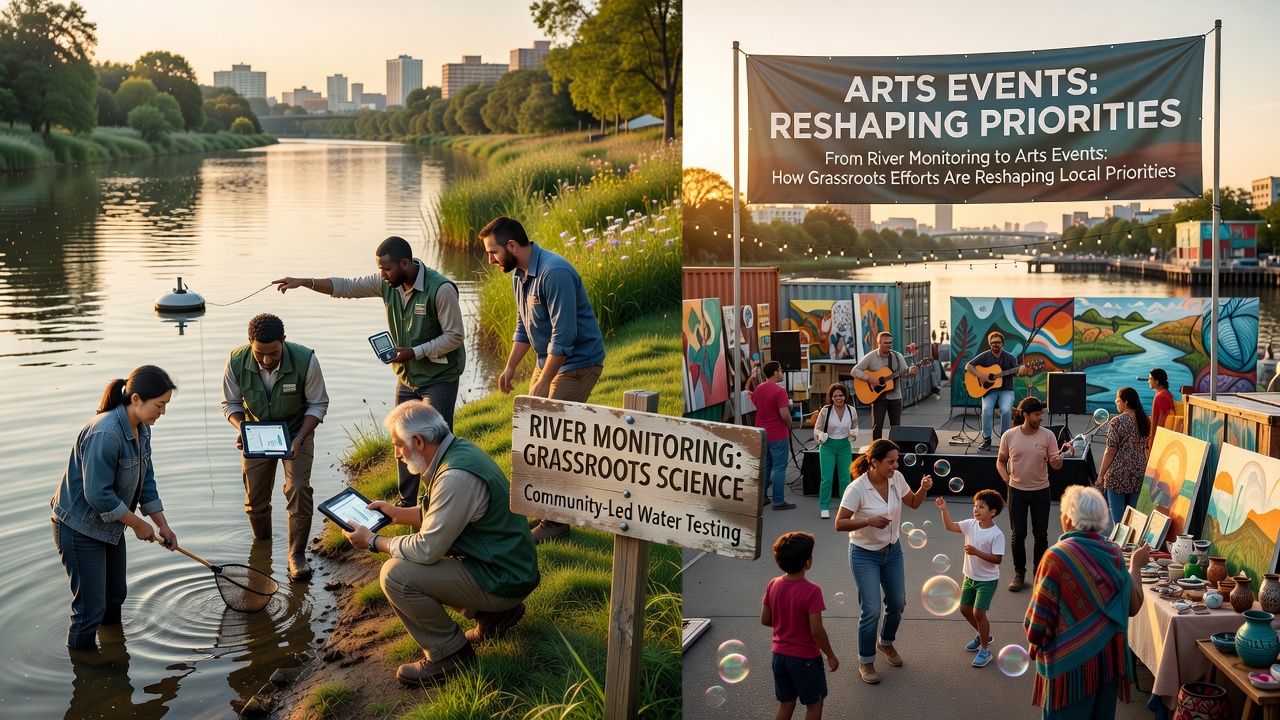
Volunteer groups in several watersheds began systematic river monitoring as early as 2022, deploying sensors and conducting regular sampling for pollutants, temperature shifts, and biodiversity indicators. Researchers from academic institutions documented how these efforts produced datasets that local governments later incorporated into watershed management plans. According to reports from the U.S. Environmental Protection Agency, community-collected data has supplemented official monitoring in over 150 watersheds nationwide, providing higher frequency readings than agency staff alone could achieve.
Participants often meet weekly at designated sites, using standardized protocols developed in partnership with university extension services, and results feed into public dashboards that track changes over seasons. One study from the Australian Department of Climate Change, Energy, the Environment and Water highlighted similar volunteer networks in the Murray-Darling basin that identified seasonal algae blooms ahead of official alerts, prompting earlier intervention measures.
Expansion into Arts and Cultural Activities
Monitoring groups noticed sustained public interest beyond data collection, leading organizers to introduce arts events that combine environmental themes with performances, installations, and workshops. These events occur in river-adjacent parks and community centers, drawing families who first learned about local waterways through monitoring outreach. Attendance records from multiple cities indicate that combined monitoring-and-arts days attract 30 to 50 percent more participants than monitoring sessions alone.
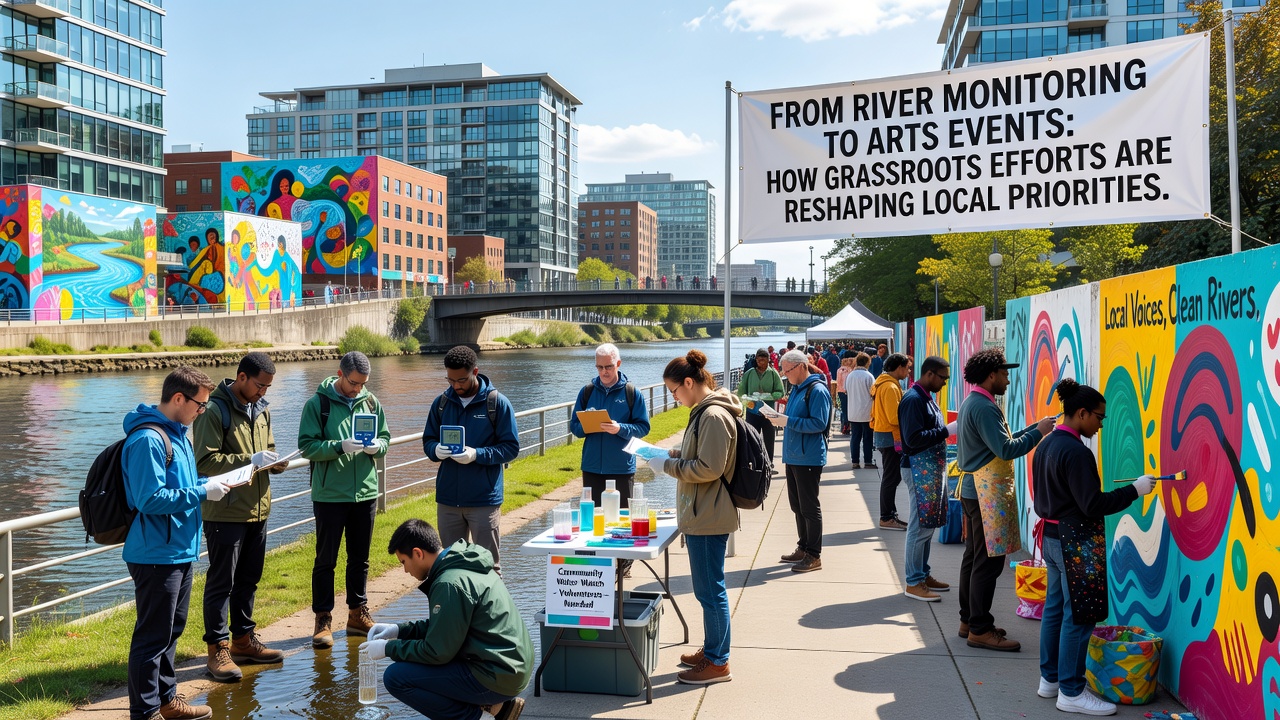
Local artists collaborate with scientists to create sculptures from recycled river debris, while musicians compose pieces based on water flow recordings. Such integrations have appeared in European programs tracked by the European Environment Agency, where cultural components increased volunteer retention rates by highlighting tangible connections between data and creative expression. In September 2026, several North American cities plan coordinated festivals that pair real-time river sensor displays with evening performances, expanding the model further.
Effects on Local Government Priorities
Municipal budget documents from participating areas show gradual shifts in funding allocations toward hybrid environmental and cultural projects. City councils have approved new line items for joint river clean-up and public art initiatives after reviewing participation statistics and survey responses from residents. Figures released by Statistics Canada indicate that neighborhoods with active grassroots monitoring reported higher rates of resident involvement in local advisory committees compared to areas without such programs.
Policy adjustments include updated zoning near waterways that incorporates public art requirements, and procurement processes that prioritize community-sourced environmental data when evaluating infrastructure proposals. Observers note that these changes emerged after repeated presentations of volunteer findings at open council meetings, where attendance by arts event participants amplified visibility.
Case Examples from Different Regions
In one Midwestern U.S. county, a river monitoring collective partnered with a regional arts council to host quarterly events that feature live water testing demonstrations followed by gallery exhibits. County records list increased tourism revenue during these weekends, which in turn supported further sensor purchases. A parallel effort in New Zealand documented by the Ministry for the Environment connected Māori community monitoring traditions with contemporary performance pieces, resulting in bilingual educational materials distributed to schools.
European examples tracked through Horizon Europe research consortia demonstrate how citizen science apps developed for river data now include event calendars that promote upcoming arts activities. Cross-border exchanges between groups in Germany and the Netherlands have produced shared toolkits that other localities adapt for their own waterways.
Conclusion
Grassroots river monitoring has evolved into broader community programming that includes arts events, and available data indicates these combined efforts continue to inform local priority-setting processes. Participation metrics, policy references, and scheduled 2026 activities point to sustained momentum across regions that adopted the integrated approach.